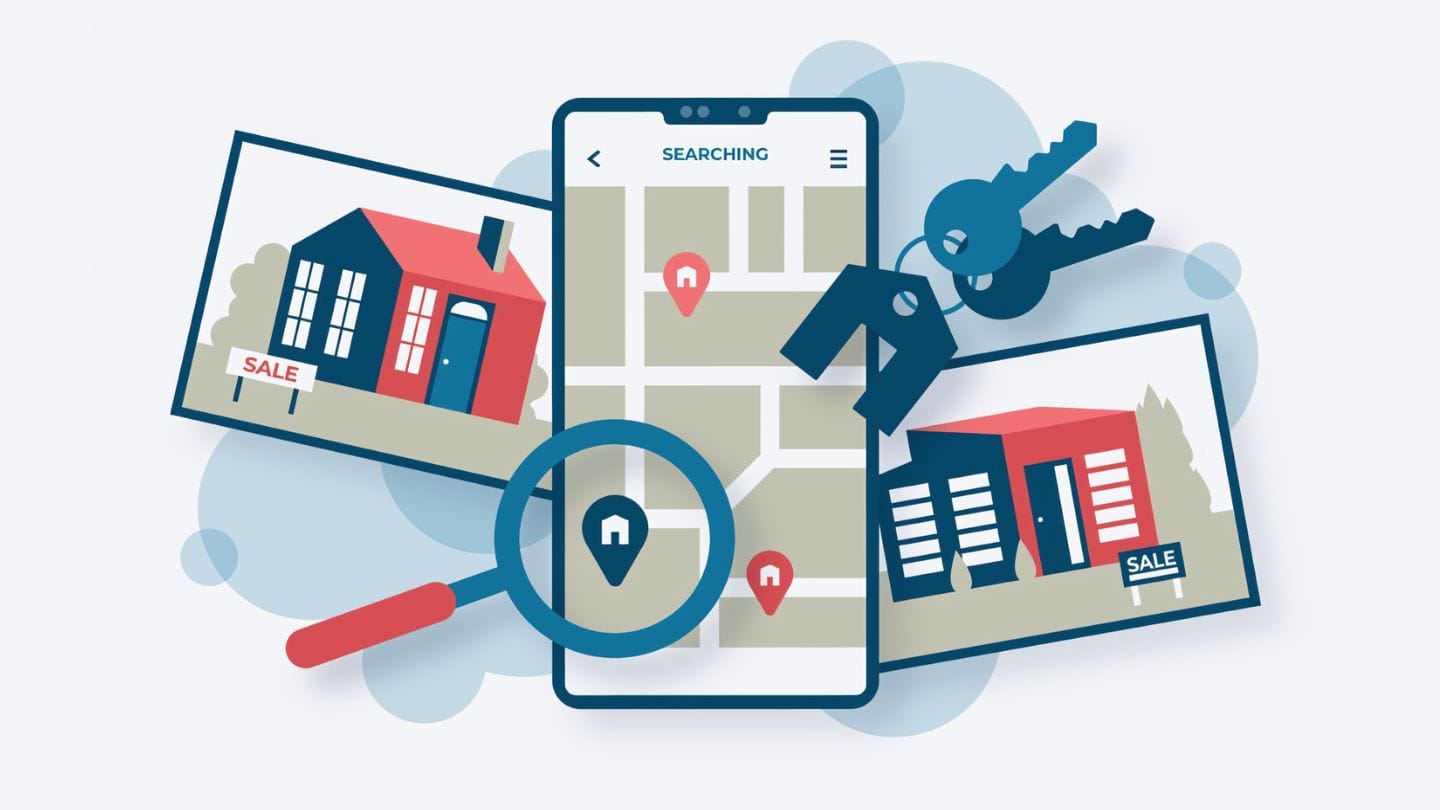
Most homebuyers and sellers start online. By the time they reach out to an agent, they’ve usually already searched Google, looked at listings, compared names, and started forming opinions.
That’s why local SEO matters so much in real estate.
When someone searches for a real estate agent in your area, you’re not competing for random traffic. You’re competing for people who may actually need help soon. The problem is that a lot of agents either ignore local SEO completely or treat it like a one-time setup task.
It’s not.
I spent years working in real estate SEO, and one thing I saw over and over was this: the agents and brokerages that showed up more consistently in local search usually weren’t doing anything flashy.
They were just doing the fundamentals better. Their Google Business Profiles were in better shape. Their reviews were stronger. Their location relevance was clearer. Their content actually reflected the market they worked in.
That’s what this post is about.
What local SEO actually means for REALTORS®
Local SEO is the work that helps you show up when someone searches for an agent, team, or brokerage in a specific area.
That can mean searches like:
- real estate agent in Atlanta
- REALTOR near me
- best listing agent in East Cobb
- Buckhead real estate team
- homes for sale in Decatur with local agent
You don’t need to rank everywhere. You need to show up where your business actually happens.
That’s the part a lot of agents miss. Local SEO is not about broad visibility for the sake of it. It’s about becoming easier to find in the markets you know best.
Optimize your Google Business Profile
This is still one of the most important local SEO assets you have.
Your Google Business Profile (GBP) can influence how you show up in Maps, local pack results, and branded searches. It also shapes one of the first impressions someone gets when they search your name or your business. Google’s own documentation says site owners should focus on content and experiences that help people, and your GBP is part of that local experience.
Here’s where I’d focus.
1. Claim and verify your profile
If you haven’t claimed and verified your profile, fix that first. Until you do, you have less control over how your business appears.
2. Choose the right primary category
If you haven’t claimed and verified your profile, fix that first. Until you do, you have less control over how your business appears.
3. Keep your core business info consistent
Your business name, phone number, website, and service details should match what’s on your site and across your other listings. Messy business info makes everything harder.
4. Add real photos
Use actual photos of yourself, your team, your office if you have one, and your market. Real estate is visual, but more than that, local trust is visual too. A stale profile with three old headshots is not helping you much.
5. Keep it active
Update photos, review your services, answer questions if they come in, and pay attention to what the profile looks like in search. Too many agents set this up once and never look at it again.
Reviews matter more than most agents think
Reviews are not just a conversion tool. They also strengthen your local presence.
A profile with recent, detailed reviews tends to look more trustworthy to both searchers and Google. And in real estate, the wording matters. A review that says “great agent” is nice. A review that says “helped us buy a home in Alpharetta” is much more useful.
That kind of language reinforces both service and place.
I saw this a lot in real estate. The strongest profiles were not always the ones with the most reviews overall. They were often the ones with a steady flow of recent reviews that sounded specific and real.
A few tips:
ask at natural moments, especially after closing
send a direct review link
encourage clients to mention the neighborhood, city, or type of transaction if they’re comfortable
- reply to reviews like a person, not like a script
Stop using vague local keywords
This is where a lot of real estate SEO content gets lazy.
If your site says things like “trusted local expert” or “top REALTOR® in the area” without naming the places you actually serve, you are making Google guess.
Don’t make Google guess.
Use real locations and real service language throughout the site where it makes sense:
- luxury real estate agent in Buckhead
- townhome specialist in Smyrna
- listing agent in East Cobb
- real estate team serving Alpharetta and Milton
You don’t need to force location names into every paragraph. That starts sounding fake fast. But your site should make it obvious where you work and what kind of clients or properties you help with.
How to find the right local keywords
Identify the long-tail phrases that match your services. Tools like Ubersuggest and Google Autocomplete are your best friends.
Use them naturally in your headers, paragraphs, and image alt text. Don’t stuff them. Google’s smarter than that.
Mix in location + property type, like “townhomes in Cabbagetown” or “luxury condos in Buckhead.”
You’re not just looking to get traffic, you’re trying to get qualified traffic.
People looking for exactly what you offer.
Clean up your local citations
This is not exciting work, but it matters.
Local citations are mentions of your business details across directories and business listings. Think Zillow, Realtor.com, Yelp, Bing, Apple Maps, and other local or industry sites.
If your information is inconsistent across those places, it weakens trust and creates confusion. If it’s clean and consistent, it helps reinforce your local presence.
This is one of those areas where real estate businesses get messy fast. Agents move brokerages. Phone numbers change. Old team pages stay live. Duplicate listings pile up. I’ve seen plenty of cases where local SEO issues had less to do with “strategy” and more to do with bad cleanup work that never happened.
Start with the basics:
claim the listings you can control
correct outdated info
remove duplicates where possible
keep your name, contact details, and website consistent
Build pages and content around your actual market
This is where local SEO gets a lot stronger.
A lot of agents rely on a homepage, a bio, and maybe an IDX search page, then wonder why the site does not rank. The problem is that none of those pages say much about the local market in a useful way.
You need content that proves local relevance.
That might include:
- neighborhood pages
- buyer and seller pages tied to local markets
- blog posts about local questions
- market update content
- school district or lifestyle-focused pages
- pages for specific property types in specific areas
I worked in real estate SEO long enough to see the difference between generic content and market-specific content. The local pages that tended to do better were the ones that actually said something useful. Not thin pages with the city name swapped out 20 times. Real pages with local detail, real search intent, and a clear purpose.
That distinction matters.
Write hyper-local blog content people might actually search for
This is where a lot of agents either overdo it or phone it in.
The goal is not to blog for the sake of blogging. The goal is to publish content that matches real local search behavior.
Types of content that work:
What $800K Buys in East Cobb Right Now
Best Neighborhoods in Atlanta for First-Time Buyers
Is Brookhaven or Chamblee Better for Young Families?
What to Know Before Buying a Condo in Midtown Atlanta
The Best Coffee Shops Near Inman Park Open Houses
Those are useful because they connect real estate to actual local intent.
Weak blog content tends to sound like this:
- 5 Tips for Buying a Home
- Why Staging Matters
- How to Sell Your Home Fast
Those topics aren’t useless, but they are too broad and too easy to find anywhere. They do not say why someone in your market should care.
Clean up your on-page SEO
This part matters more than people think, especially when the site is small.
Google recommends clear title links, descriptive URLs, crawlable links, and content that’s easy for both people and search engines to understand. Internal links also help Google understand your site structure and relevance.
For real estate sites, that usually means:
Better title tags
Your page titles should clearly say what the page is about and where it matters.
Bad: Home | Joel McRae Realty
Better: Atlanta Real Estate Agent | Joel McRae, REALTOR®
Cleaner headings
Your H1 should reflect the page topic. Your H2s should break the page into sections that make sense.
Better internal links
If you have a neighborhood page, link to it from relevant blog posts. If you have a listing tips article, link it to your seller services page. A lot of real estate sites feel disconnected because nothing points clearly to anything else.
Stronger image naming and alt text
Not every image needs keyword-heavy alt text. Just describe what’s there in a useful way when relevant.
Don’t ignore mobile experience and page quality
A lot of agent websites still feel clunky on mobile, and that matters because Google uses the mobile version of a site for indexing and ranking. Google also says Core Web Vitals are used by its ranking systems, even if strong scores alone do not guarantee high rankings.
That means:
- your site needs to work well on phones
- pages should load reasonably fast
- important content should not be buried
- buttons, forms, and menus should be easy to use
This is one of those things agents often overlook because they are focused on design. But a pretty site that is annoying to use on mobile is still a bad site.
Social media can support local SEO, even if it’s not a direct ranking factor
I would not oversell social media here. It is not some secret local SEO lever.
Still, it can absolutely support visibility.
When you post useful local content, market updates, listing content, neighborhood videos, or community coverage, you create more ways for people to discover your name. That can lead to more branded searches, more traffic, more shares, and more overall familiarity in your market.
That matters, especially in real estate, where trust builds over repeated exposure.
The key is to post things tied to local expertise, not just generic self-promotion.
What matters most:
Volume: The more high-quality reviews you have, the more trustworthy you look to both people and algorithms.
Recency: A review from three years ago won’t carry as much weight as one from last week.
Content: A review that says “great agent” helps. But one that says, “helped us buy our first home in Alpharetta” tells Google exactly what you do and where.
Check what’s working and keep improving
SEO is never one-and-done. Rankings shift, competitors improve, and search behavior changes.
If you are not checking what’s working, you are guessing.
I usually like monthly check-ins for this. Nothing dramatic. Just enough to spot pages that need a refresh, opportunities you are missing, and trends worth acting on.
Sometimes a small update goes a long way. A cleaner title tag, stronger intro, better internal linking, or a more specific paragraph can be enough to move a page up.
What to monitor:
Google Search Console: See what queries are driving impressions and clicks. If you’re ranking well for something, double down. If you’re on page two, maybe it’s time to optimize the content.
Google Analytics: Look at time on page, bounce rate, and which blog posts or pages are getting the most traffic.
Your Top Pages: Are they up to date? Could they use a refresh? Sometimes changing a title or reworking a paragraph helps you move from position #7 to #3.
Also keep an eye on what others in your market are doing.
If someone’s ranking ahead of you, study their content structure. Do they answer more questions? Use better images? Include video? These are things you can adapt without copying.
The goal isn’t perfection. It’s progress. A small tweak each month can add up to big traffic gains by the end of the year.
Local SEO for REALTORS® is mostly about clarity
That’s really what this comes down to.
A lot of agents make local SEO harder than it needs to be. They chase broad visibility, publish generic content, ignore their Google Business Profile, and leave weak location signals all over the site.
The agents who tend to do better are usually the ones who are easier to understand.
Google can tell where they work. Searchers can tell what they do. Their reviews back it up. Their content sounds local. Their pages actually help.
That’s the goal.
If you are a REALTOR® trying to rank in your market, start there. Tighten the basics. Make your local relevance more obvious. Create content tied to real places and real questions. Then build from that.
That’s usually where the real progress starts.
Let’s grow your traffic together
Have an SEO question or need help with a project? Whether you’re a small business or a national brand, I’ll help you rank higher and convert more.