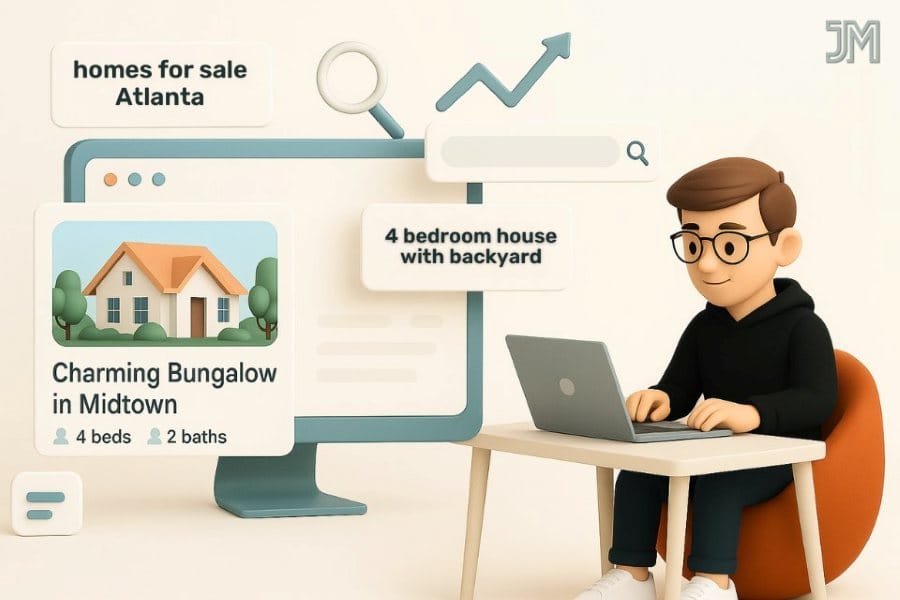
Most real estate agents are not thinking about SEO when they sit down to write a listing description.
They’re trying to get the listing live, make the copy sound appealing, stay within the character count, and move on to the next thing. Usually the assumption is that the MLS, brokerage website, or marketing team will handle the rest.
I get it. I spent years working in real estate SEO, and one of the biggest patterns I saw was this: agents usually do not control much of the actual website. They often cannot change the page template, the URL, the technical setup, or how the IDX feed works. In a lot of cases, the listing description is one of the only pieces of text they can meaningfully influence.
That matters more than people think.
So, do listing descriptions help SEO?
Yes, they can. Just not in the overblown way some marketing articles make it sound.
A listing description by itself is not going to make a property page suddenly outrank Zillow or Redfin. But it can help search engines understand the page better, make the listing more useful across platforms, and give a thin page more original content to work with.
In real estate SEO, that isn’t nothing. On a lot of sites, it’s one of the few real opportunities agents actually have.
Where listing descriptions actually help SEO

The biggest mistake people make with this topic is expecting too much from one paragraph.
A listing description is not a full SEO strategy. It won’t fix weak site structure, bad internal linking, thin neighborhood content, poor page targeting, or an underwhelming IDX experience.
What it can do is help in the places where listing pages are usually weak.
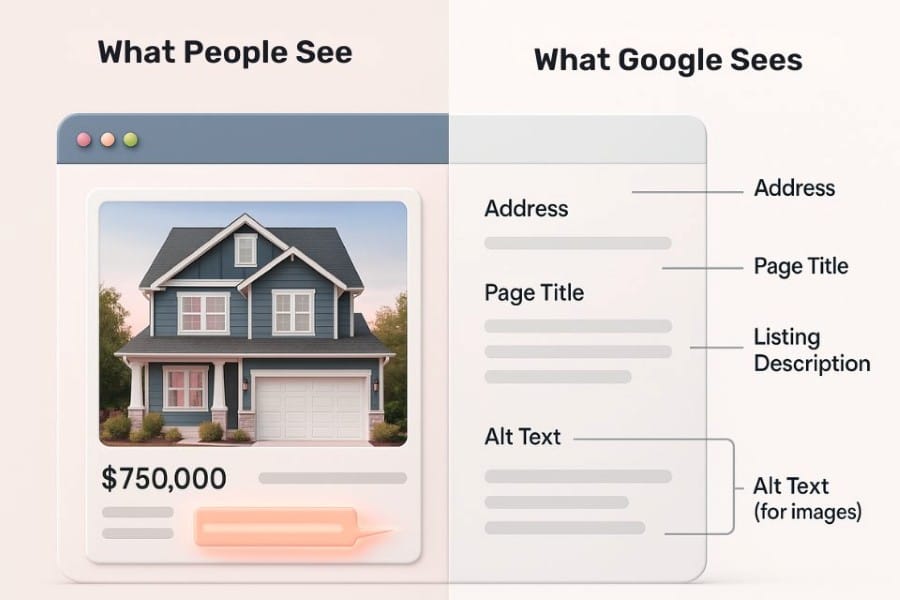
On most real estate websites, especially IDX-driven ones, the property page is built from a template. It includes the address, photos, map, square footage, price, bed and bath count, and maybe a mortgage calculator or lead form. Most of that content is structured and repetitive. The description is often the one place where the page has room for natural language and actual specificity.
That is where the value comes in.
A stronger listing description can:
- give Google more useful text to understand the page
- add location and feature relevance
- make the page less generic
- improve how the listing reads when syndicated elsewhere
- give buyers a better reason to click
That last point matters. SEO may help you rank, but the content you write needs to be compelling once someone sees the listing.
Why generic listing copy falls flat
A lot of listing copy sounds nearly identical.
You have probably seen versions of this a thousand times:
“Stunning 4BR/3BA home in sought-after neighborhood with open floor plan, gourmet kitchen, and plenty of space for entertaining”
There is, of course, nothing technically wrong with that sentence. It’s just empty.
It could apply to hundreds of homes. It says almost nothing specific, and that is the problem.
Now compare it to this:
“Renovated 4-bedroom home in Peachtree Hills with open-concept living, quartz countertops, a fenced backyard, and walkable access to Peachtree Battle Shopping Center.”
That version works better because it gives both buyers and search engines something real to work with.
It includes:
- a real neighborhood
- specific features
- local context
- language that sounds like an actual place, not a template
That is what separates useful listing copy from filler.
This isn’t about cramming in keywords. It’s about saying something concrete.
What I’ve seen on real estate websites
This is where generic SEO advice usually falls apart.
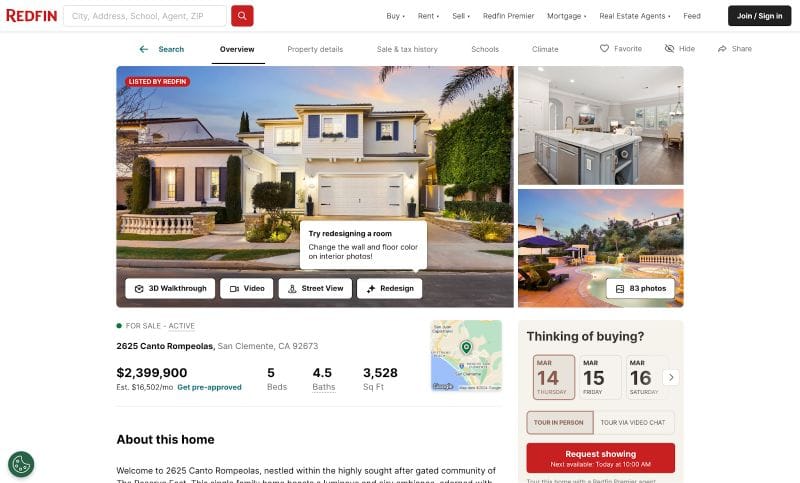
A lot of agents technically have a website, but they do not truly control it. They may be working off a brokerage subpage or subdomain. They may be using a templated agent site. They may have IDX listing pages with almost no room for custom optimization. I dealt with that kind of setup all the time while working in real estate SEO.
That is exactly why I take listing descriptions seriously.
When the rest of the page is mostly fixed, the copy becomes one of the few places where you can improve relevance. It may not solve every problem, but it does help give the page more substance. I would always rather have a listing page with specific, thoughtful copy than one with another vague paragraph full of words like “stunning,” “charming,” and “must-see.”
And the impact is not limited to one page on one site.
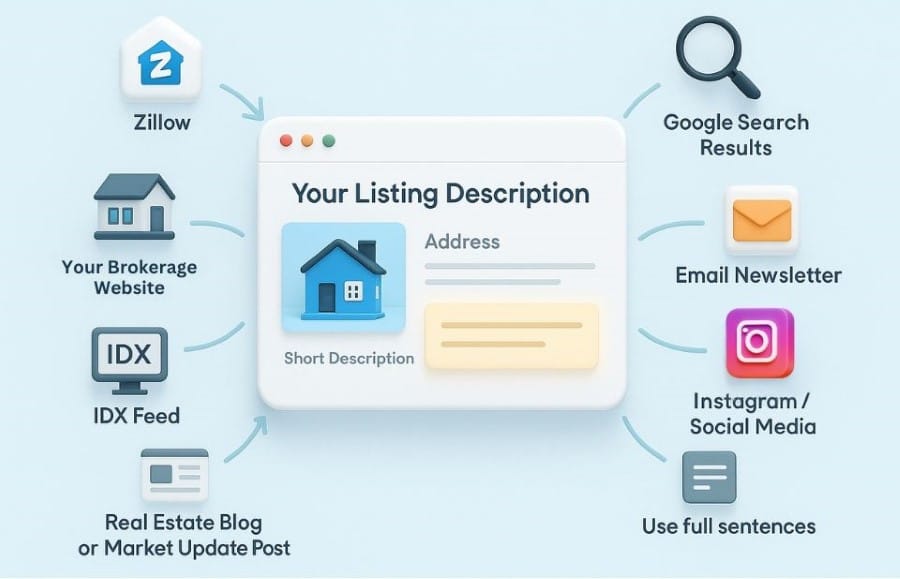
That same description often gets reused across the brokerage website, MLS-connected platforms, listing alerts, social posts, newsletters, and other places where the home appears. So even if the direct ranking impact is small, the visibility impact can still be meaningful.
How to write SEO-friendly listing descriptions
You don’t need to sound like an SEO consultant to write better listing descriptions. You just need to think more clearly about what a buyer would actually search for and what details actually matter.
1. Mention the neighborhood (naturally)
If the home is in a known neighborhood or community, name it.
Don’t hide behind vague phrases like “great location” or “prime area.” Those don’t help anyone.
A specific neighborhood name gives the page local relevance and gives buyers a more useful frame of reference.
Weak: “Charming home in a great area.”
Better: “This Brookhaven home sits on a quiet, tree-lined street near Candler Park.”
2. Use features buyers actually search
A lot of listing descriptions lean too heavily on vague adjectives.
“Beautiful kitchen” does not mean much.
“Quartz countertops, gas range, oversized island, and walk-in pantry” tells people what is actually there.
Think about the phrases a homebuyer might search for or respond to:
- fenced backyard
- quartz countertops
- primary suite on main
- home office
- screened porch
- walk-in pantry
- renovated bath
- hardwood floors
- walkable to shops and restaurants
These are the kinds of features that buyers actually care about and often search for. The clearer your wording is, the better.
3. Add local landmarks or lifestyle details when relevant
This is especially helpful when it is real and natural, not forced.
If the home is walkable to shops, close to a park, near a trail, zoned for a well-known school, or tied to a lifestyle perk buyers care about, work that in naturally.
That kind of context helps the description feel grounded in the real world. It also gives the page stronger local signals.
4. Write in full sentences, not just a feature list
A feature dump is not a description.
I know why agents do it. It’s fast. It fits. It feels safe.
But a sentence gives the copy flow and meaning. It also reads better to both people and search engines.
Weak: “Hardwoods. Fireplace. Large yard. Updated kitchen.”
Better: “Inside, you’ll find hardwood floors, a bright living room with fireplace, and an updated kitchen that opens to a large fenced backyard.”
That is still concise. It just sounds like a person wrote it.
5. Lead with what is most distinctive
The first sentence matters more than a lot of people realize.
Lead with what actually matters most about the home. Maybe that’s the location. Maybe it’s the renovation. Maybe it’s the lot, the layout, the school district, or the outdoor living setup.
Start with the strongest angle, not the safest one.
Why this matters across more than just your website
One thing agents often miss is how far that listing description travels.
The moment the listing goes live, that text can end up on your brokerage site, MLS-connected pages, portals, email campaigns, social captions, and internal marketing materials. In a lot of those places, the description is one of the main things shaping how the property is presented.
That means stronger copy can do more than support a single listing page.
It can also help with:
- click-through from email or social posts
- better marketing blurbs for brokerage content
- stronger listing roundups and promotional features
- cleaner, more useful snippets across platforms
I’ve seen this firsthand. Better listing copy does not just help SEO in the narrow sense. It makes the whole listing more usable from a marketing standpoint.
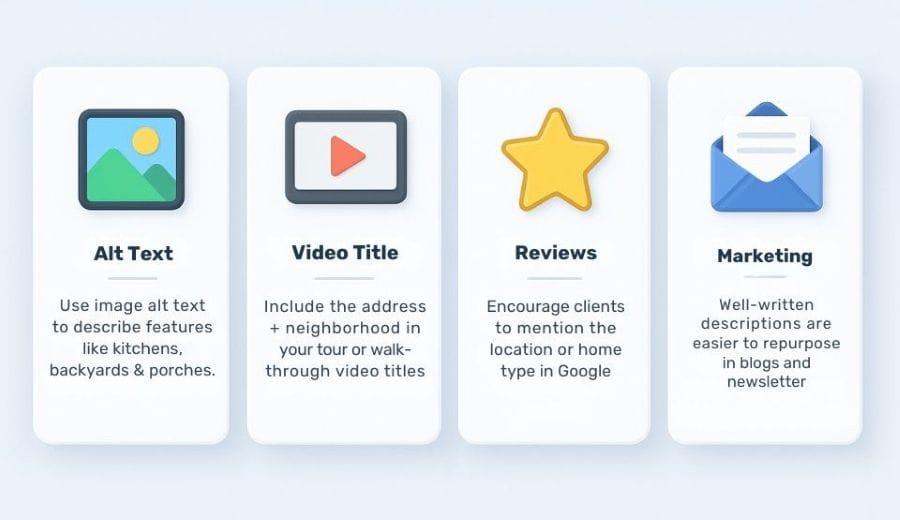
A few extra SEO moves agents can make
If you want to go a step further, there are a few small things that can help support listing visibility.
1. Use image alt text or captions when your platform allows it
Not every listing platform gives you this option, but when it does, use it well.
Skip labels like “kitchen” or “bedroom.” Be more descriptive.
A better image alt text example:
“Bright white kitchen with quartz island in Grant Park bungalow”
That helps with accessibility and gives the image more context.
2. Use better titles for videos and virtual tours
If you are uploading a virtual tour, walkthrough, or listing video to YouTube or Vimeo, title it clearly.
A title like this is much stronger:
“123 Main Street in Kirkwood | Renovated 4-Bedroom Home in Atlanta”
That is much better than “New Listing Tour” or “Beautiful Home Walkthrough.”
3. Give your marketing team better copy to work with
This part gets overlooked, but it matters.
One of the best uses of strong listing copy is repurposing.
I’ve seen good descriptions become:
- stronger email features
- better social captions
- cleaner listing roundups
- more compelling blog blurbs
- better promotional snippets for brokerage marketing
That is one reason I like treating listing descriptions as more than an MLS chore. Good copy makes the rest of your marketing easier.
Listing descriptions aren't everything, but they’re one of the few things you control
That is really the point.
Do listing descriptions help SEO? Yes. Just not because they are a shortcut.
They help because they make a page more useful. They help because they give search engines more context. They help because they make syndicated content better. And on many real estate websites, they are one of the only meaningful pieces of text an agent can directly influence.
I would never tell an agent to rely on listing descriptions alone. Real estate SEO is bigger than that. Site structure matters. Internal linking matters. neighborhood pages matter. Google Business Profiles matter. Service pages matter.
Still, I wouldn’t treat listing descriptions like an afterthought either.
If your current listing copy sounds like the same five phrases repeated over and over, that’s probably one of the easiest places to start improving.
Frequently Asked Questions
Not in the sense that you can directly optimize Zillow itself, but a stronger listing description can still make your property more useful and more clickable when it appears on Zillow or other portals. Clear, specific copy tends to perform better than generic filler.
They can contribute to a page feeling thin or repetitive, especially when the same copy is reused across multiple platforms. In real estate, some duplication is unavoidable because of syndication. Still, that is even more reason to make the original description as specific and useful as possible.
There is no perfect number, but it should be long enough to say something real. Usually that means enough space to mention the neighborhood, key features, layout, and any local or lifestyle details that make the home stand out.
Yes, when it makes sense. Neighborhood names help connect the listing to local search intent and give buyers a better sense of where the property is located.
No. They matter, but they are just one piece of the larger picture. A real estate website still needs solid page targeting, useful local content, internal links, and a good technical setup.
Let’s grow your traffic together
Have an SEO question or need help with a project? Whether you’re a small business or a national brand, I’ll help you rank higher and convert more.